

The Mentawais, done properly
The Mentawais, done properly
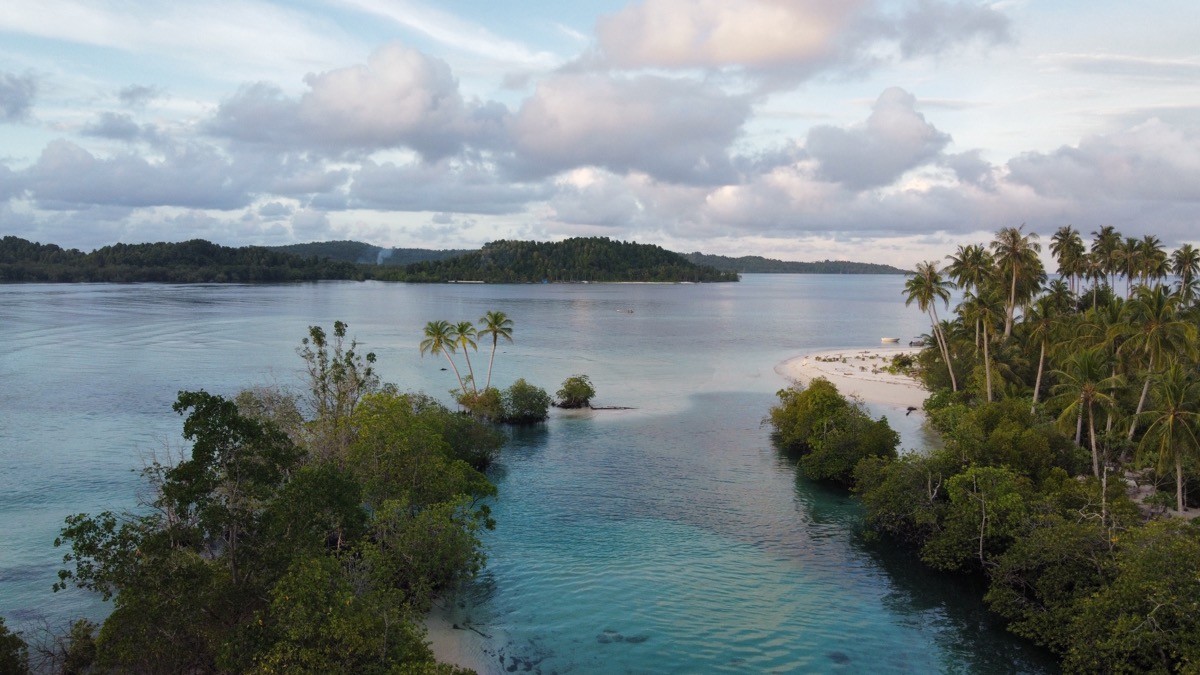
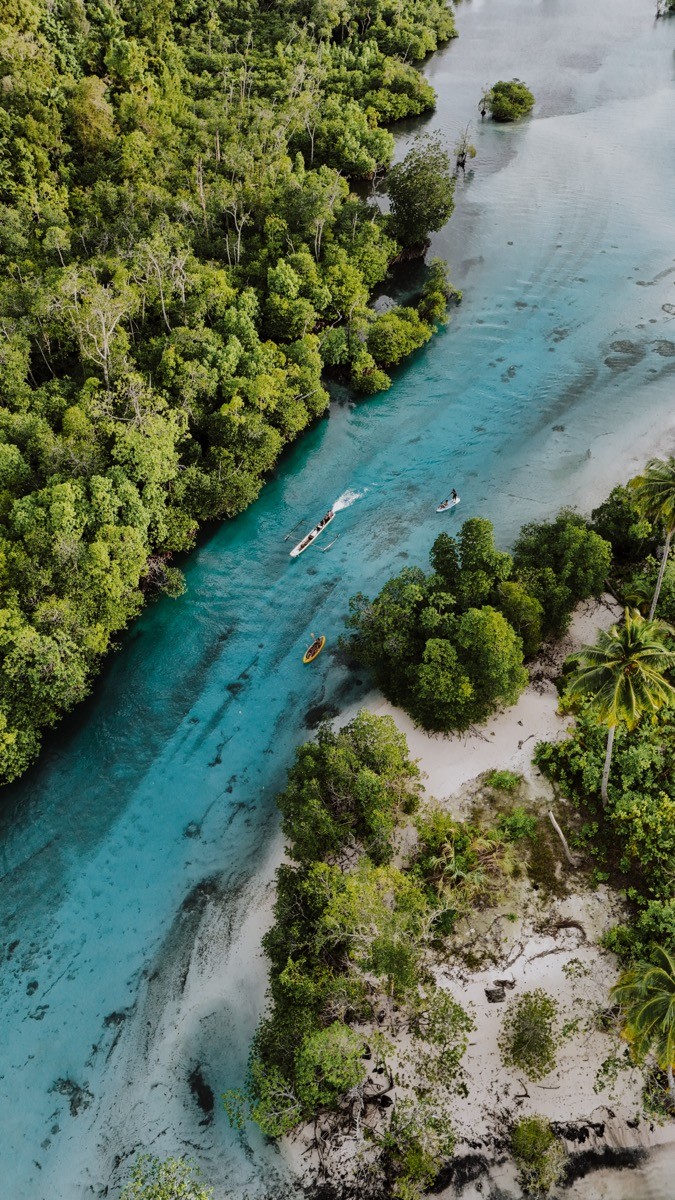
You don’t stumble onto La Isla. You earn it. Potoutogat is the kind of island that makes “off-grid” sound like an understatement. No roads. No village. No neighbours. To get there, fly into Padang, catch a ferry to Tua Pejat, then jump in a speedboat weaving between islands fringed with white sand and thick jungle.
THE SURF HIDEAWAYS ADVANTAGE
20% off your stay in June 2026
You don’t stumble onto La Isla. You earn it. Potoutogat is the kind of island that makes “off-grid” sound like an understatement. No roads. No village. No neighbours. To get there, fly into Padang, catch a ferry to Tua Pejat, then jump in a speedboat weaving between islands fringed with white sand and thick jungle.
THE SURF HIDEAWAYS ADVANTAGE
20% off your stay in June 2026
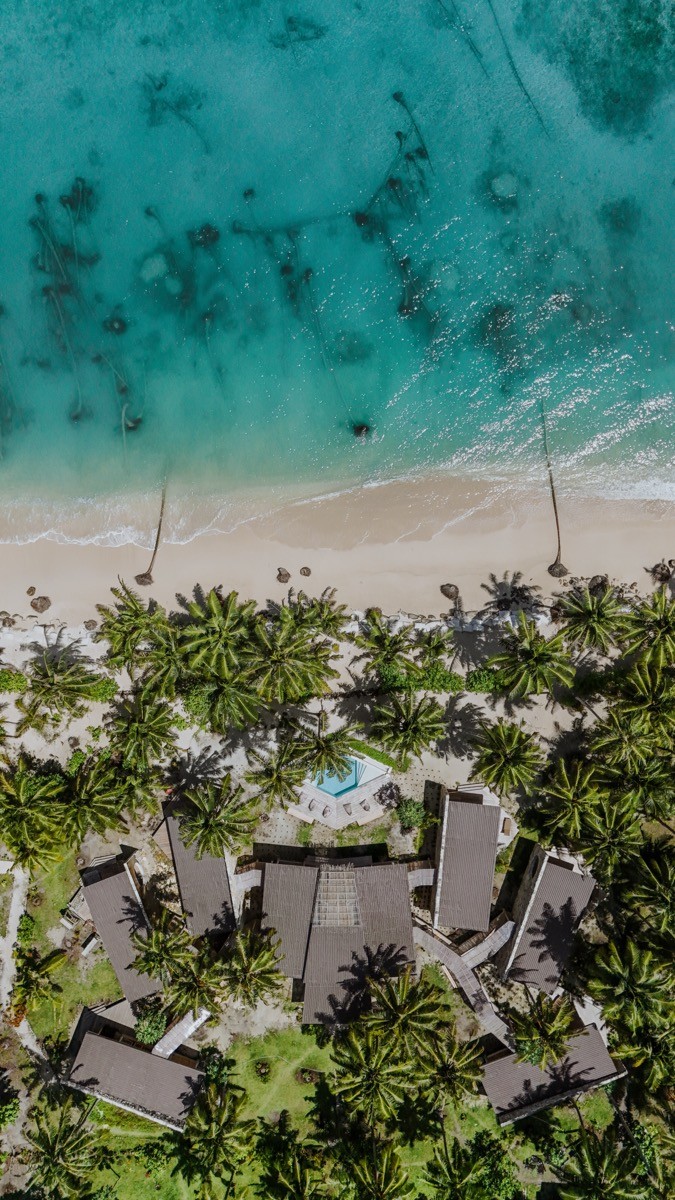
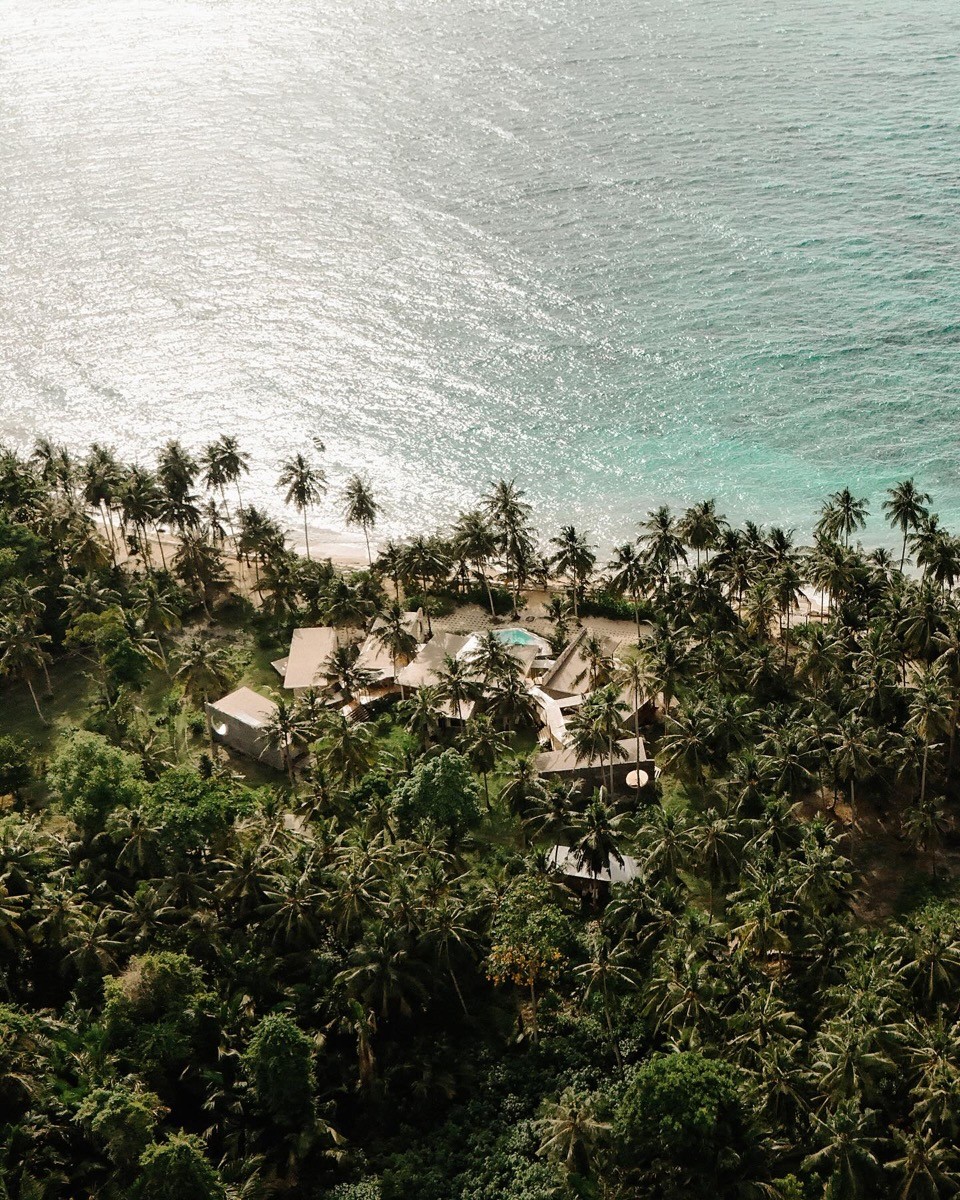
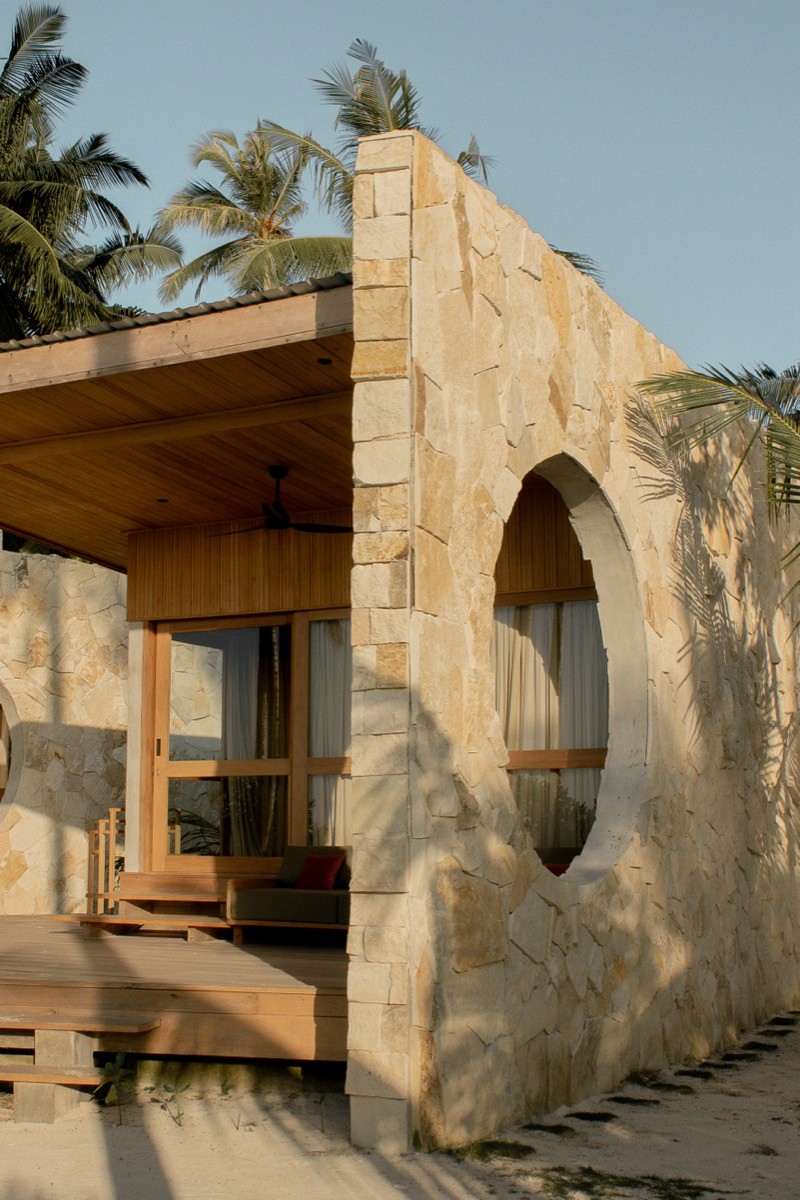
This is where Peruvian surfer Javier Castro and Spanish architects Nacho Atienza and Bea Alejandre built their surf sanctuary. Six tropical chic villas on three hectares of rainforest, fronting a pale-sand beach and turquoise reefs.
The natural blends with the architectural, the wild with the refined. It’s the work of Biombo Architects who designed every detail. Everything built here had to arrive by boat, which shows in the choices: durable materials, passive cooling, and furniture that will not surrender to salt air. The operation runs entirely on solar power. Water comes from rain collection and wells, filtered on site.
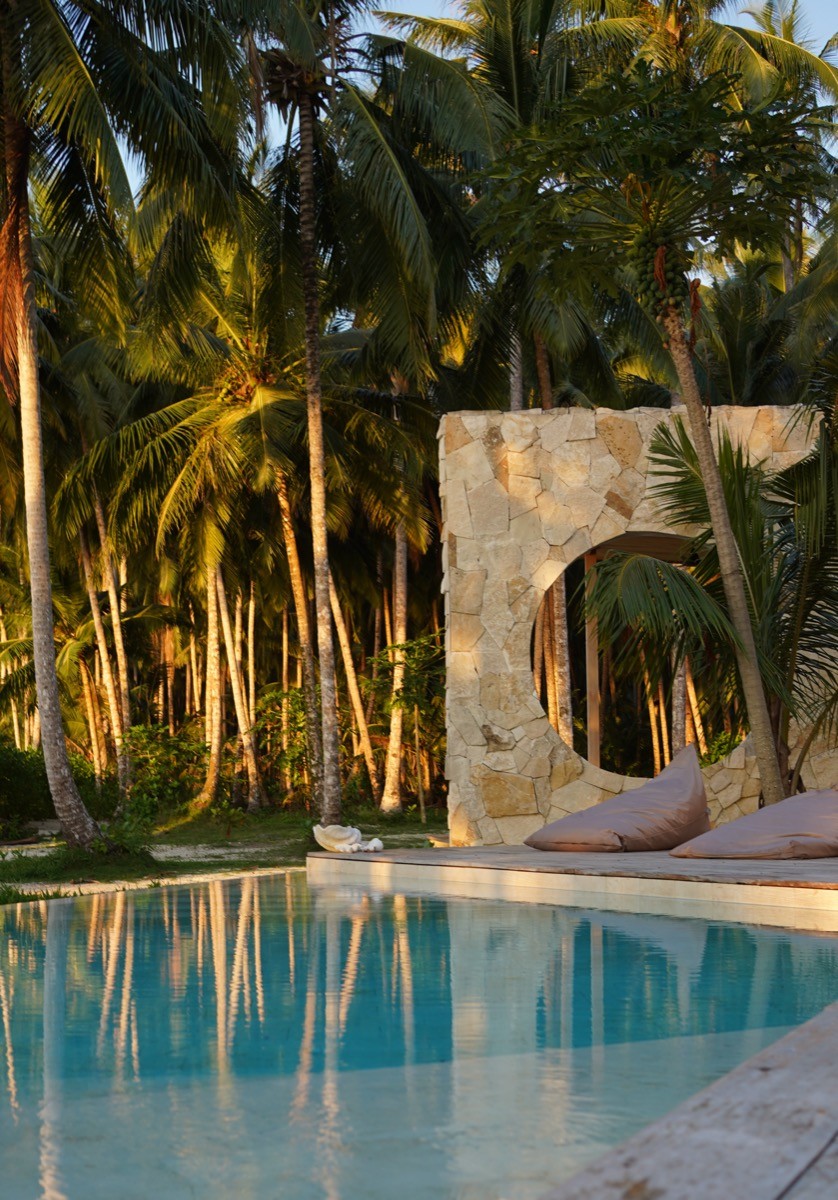
Small groups only, never more than sixteen guests. A fleet of boats to take you to the surf spot of your choice, whenever you want. A natural-stone infinity pool. Peruvian chef Carlos Testino designed the menu and trained the kitchen team. Guests eat together under an open-air pavilion. Off-grid usually means compromise. Not here.
This is where Peruvian surfer Javier Castro and Spanish architects Nacho Atienza and Bea Alejandre built their surf sanctuary. Six tropical chic villas on three hectares of rainforest, fronting a pale-sand beach and turquoise reefs.
The natural blends with the architectural, the wild with the refined. It’s the work of Biombo Architects who designed every detail. Everything built here had to arrive by boat, which shows in the choices: durable materials, passive cooling, and furniture that will not surrender to salt air. The operation runs entirely on solar power. Water comes from rain collection and wells, filtered on site.
Small groups only, never more than sixteen guests. A fleet of boats to take you to the surf spot of your choice, whenever you want. A natural-stone infinity pool. Peruvian chef Carlos Testino designed the menu and trained the kitchen team. Guests eat together under an open-air pavilion. Off-grid usually means compromise. Not here.
Rooms
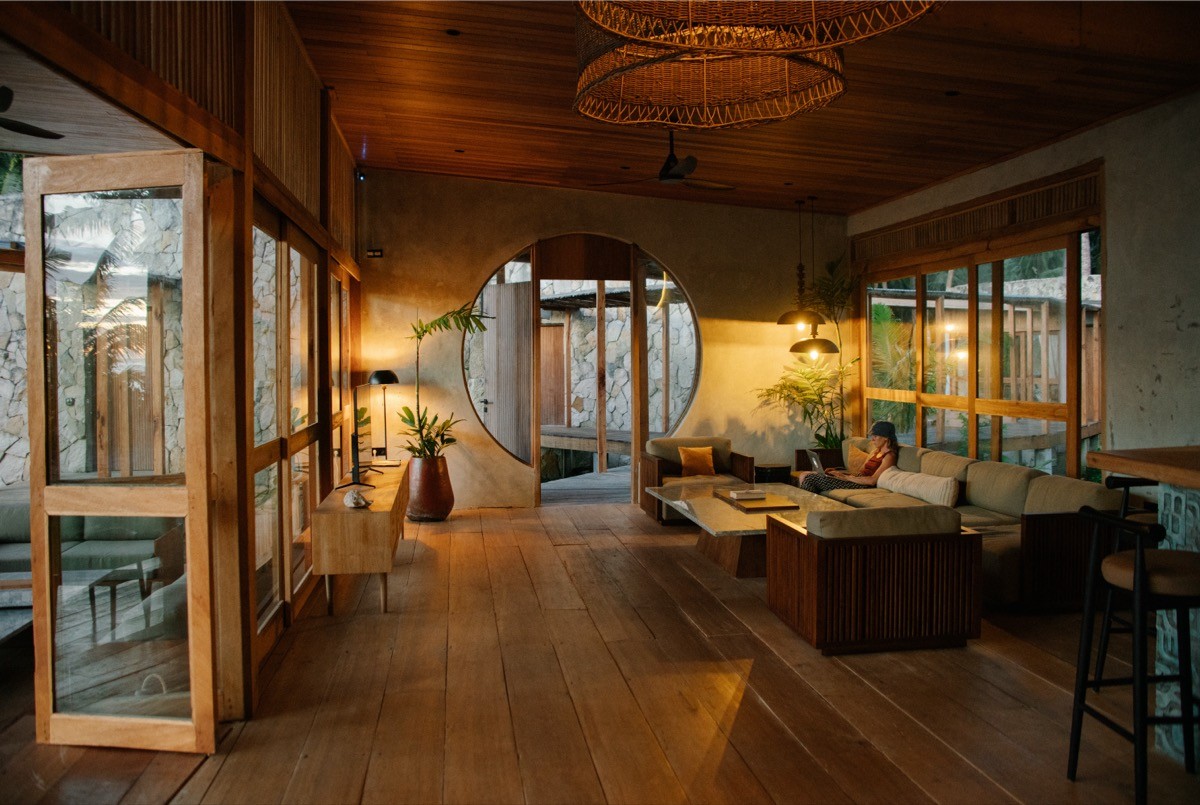
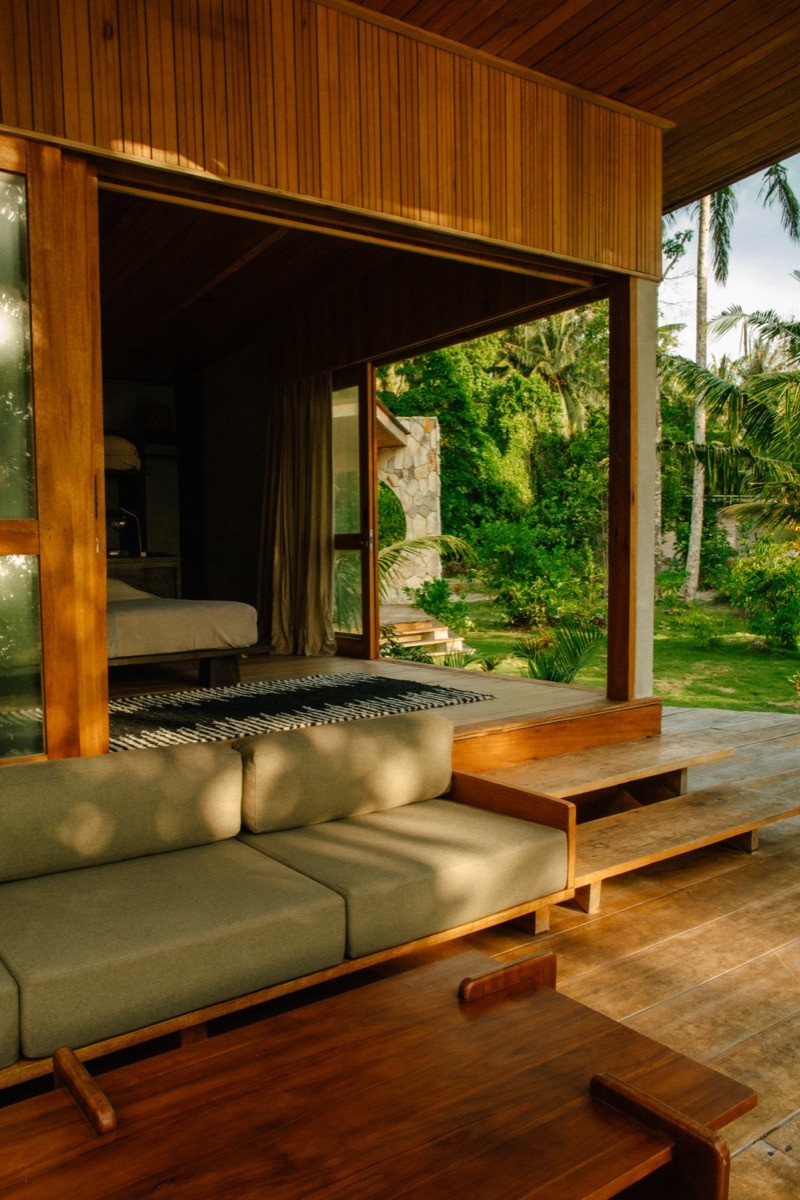
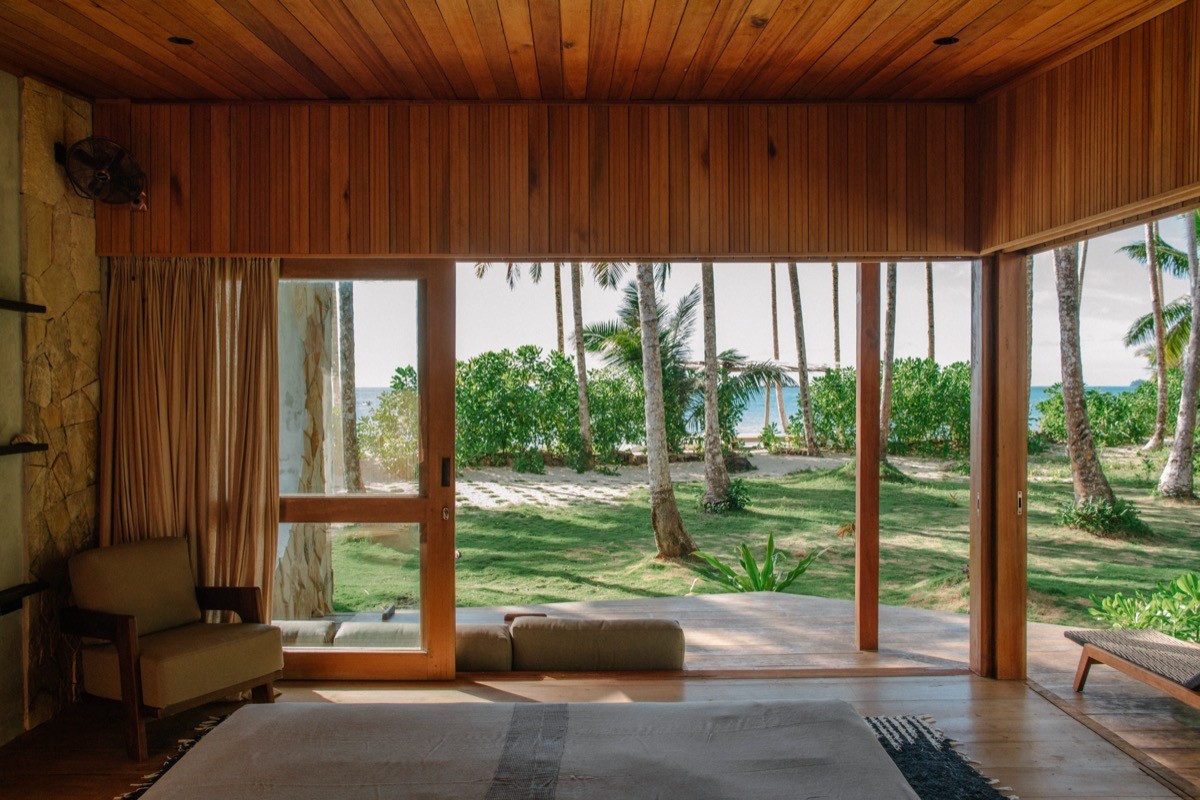
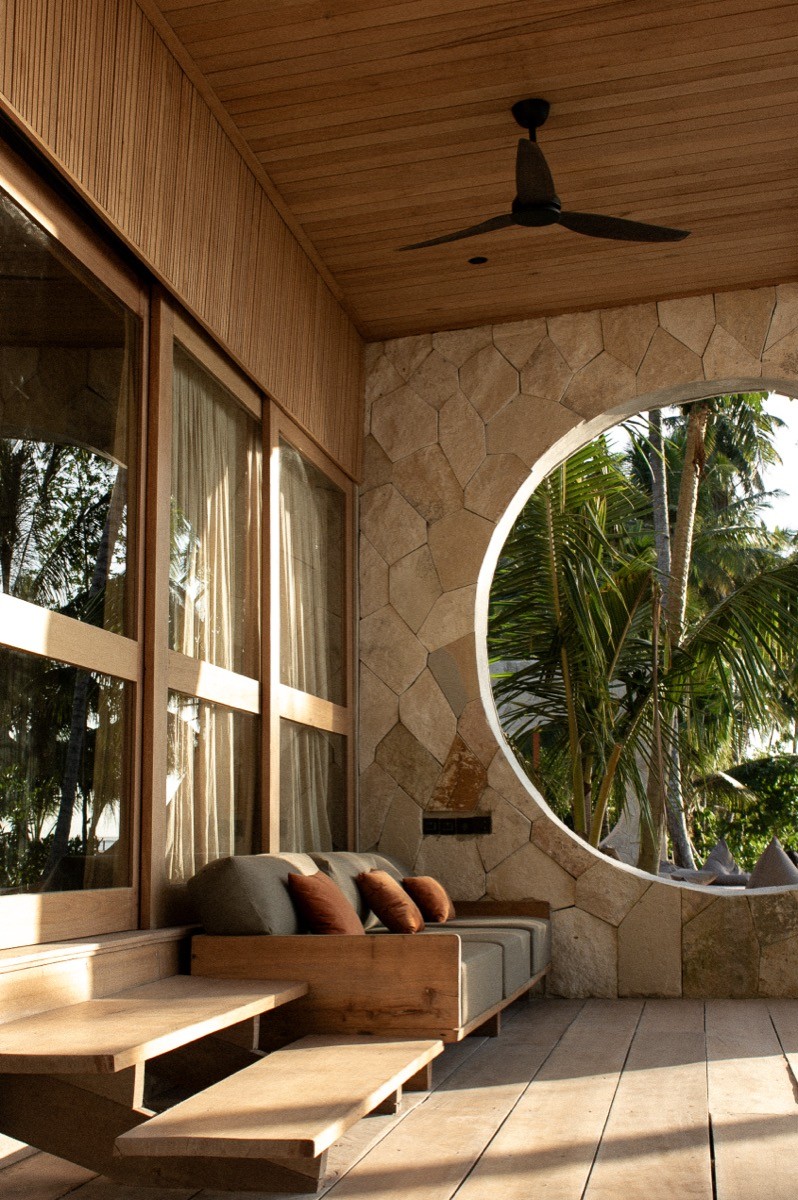
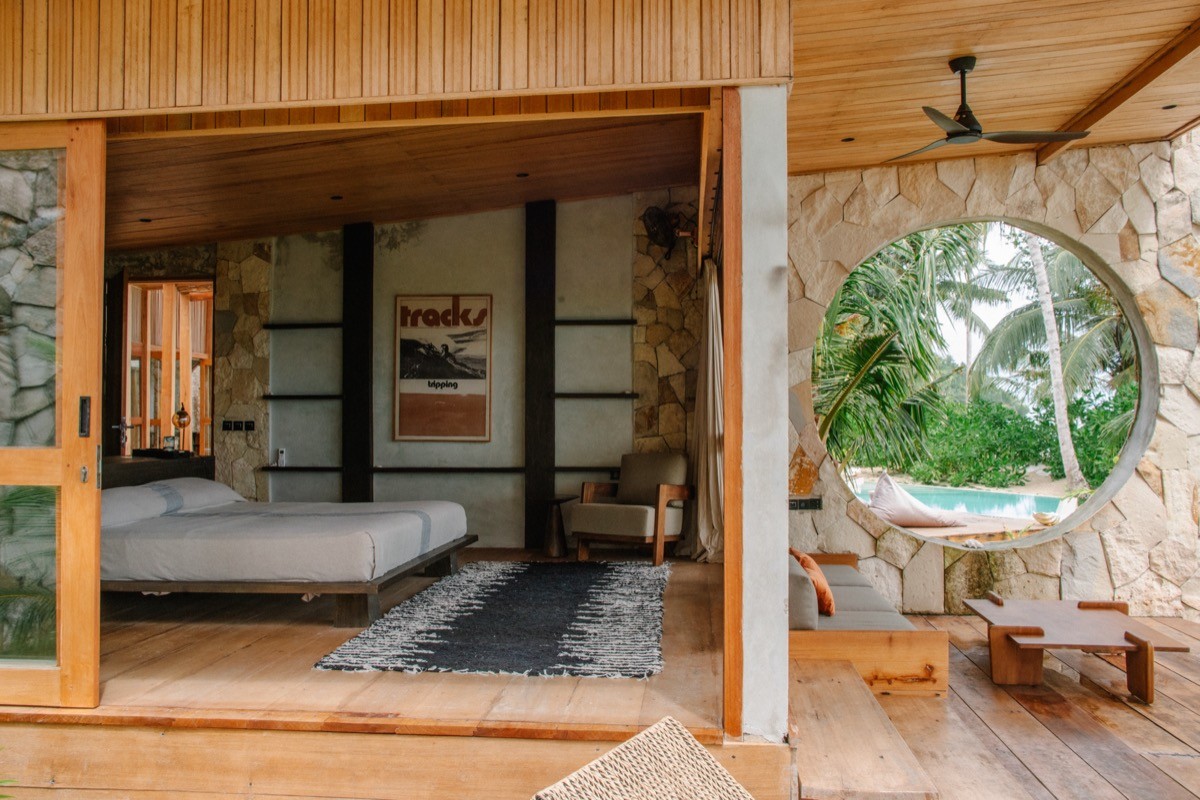
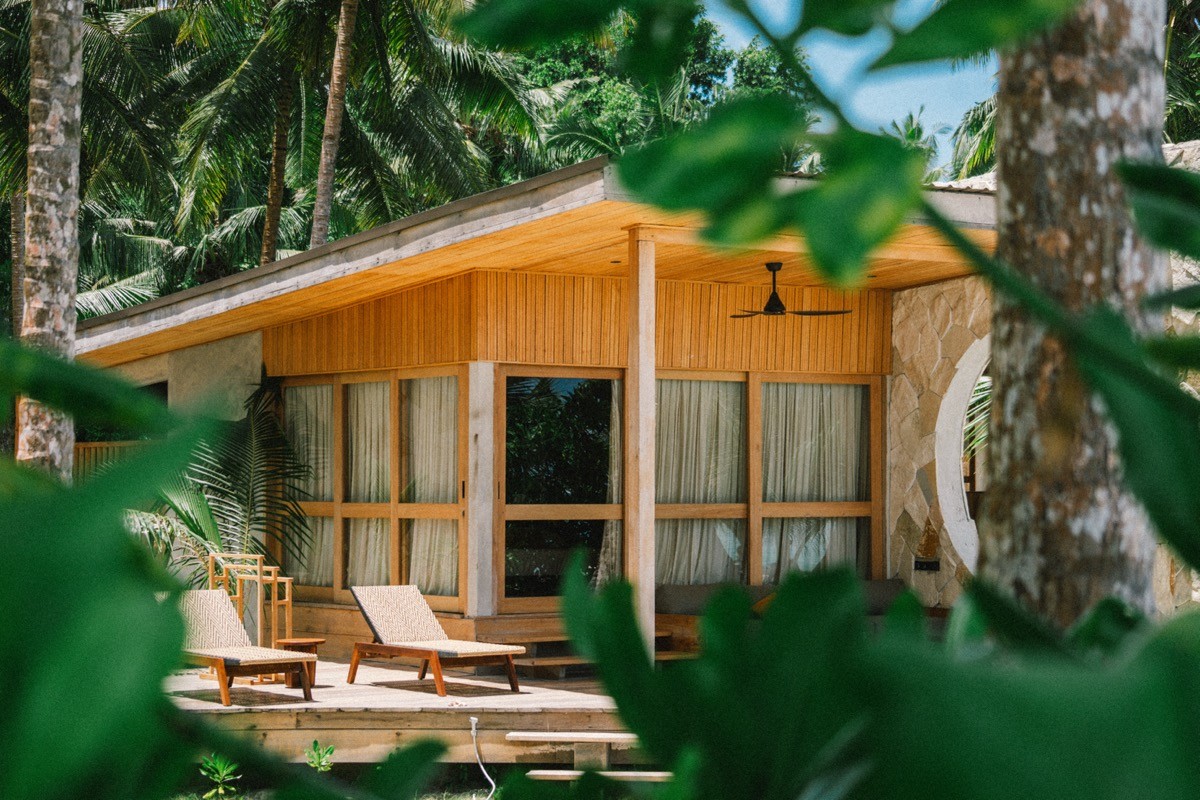
The villas embody modern tropical minimalism and blur the line between indoor and outdoor. The floor-to-ceiling windows frame either reef or jungle and open onto private terraces.
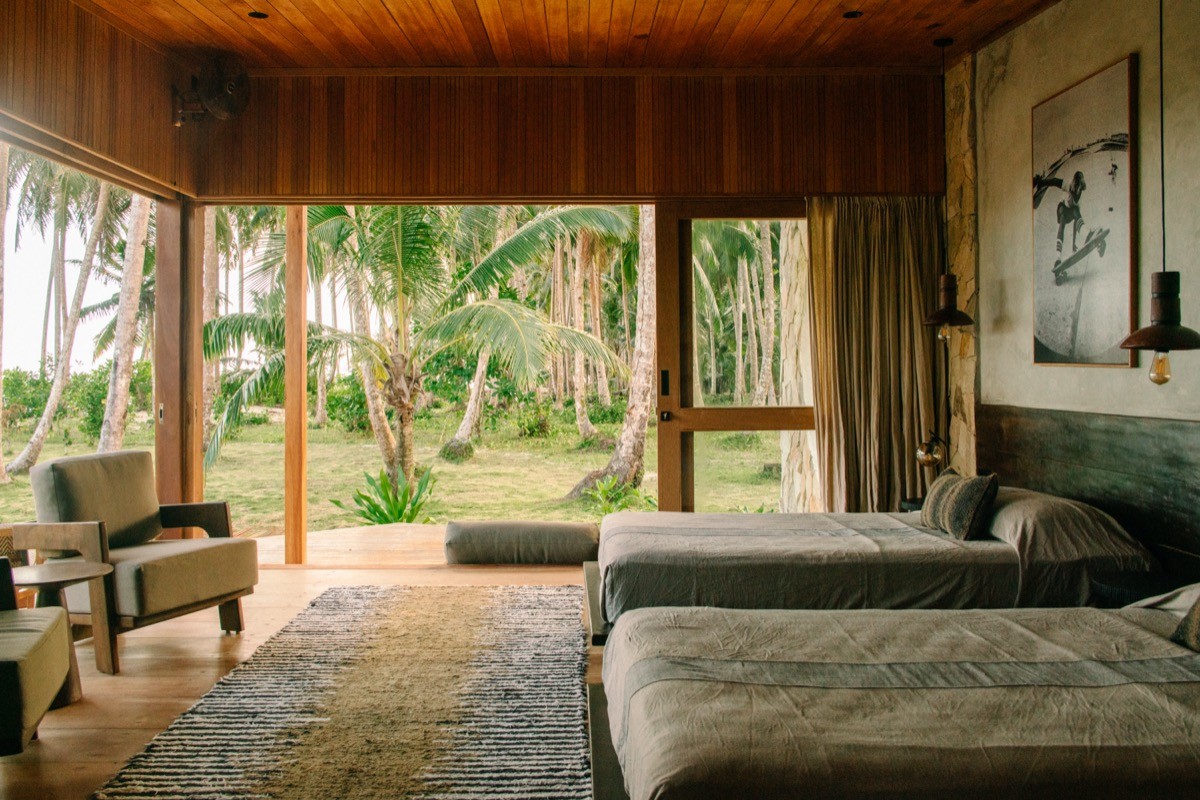
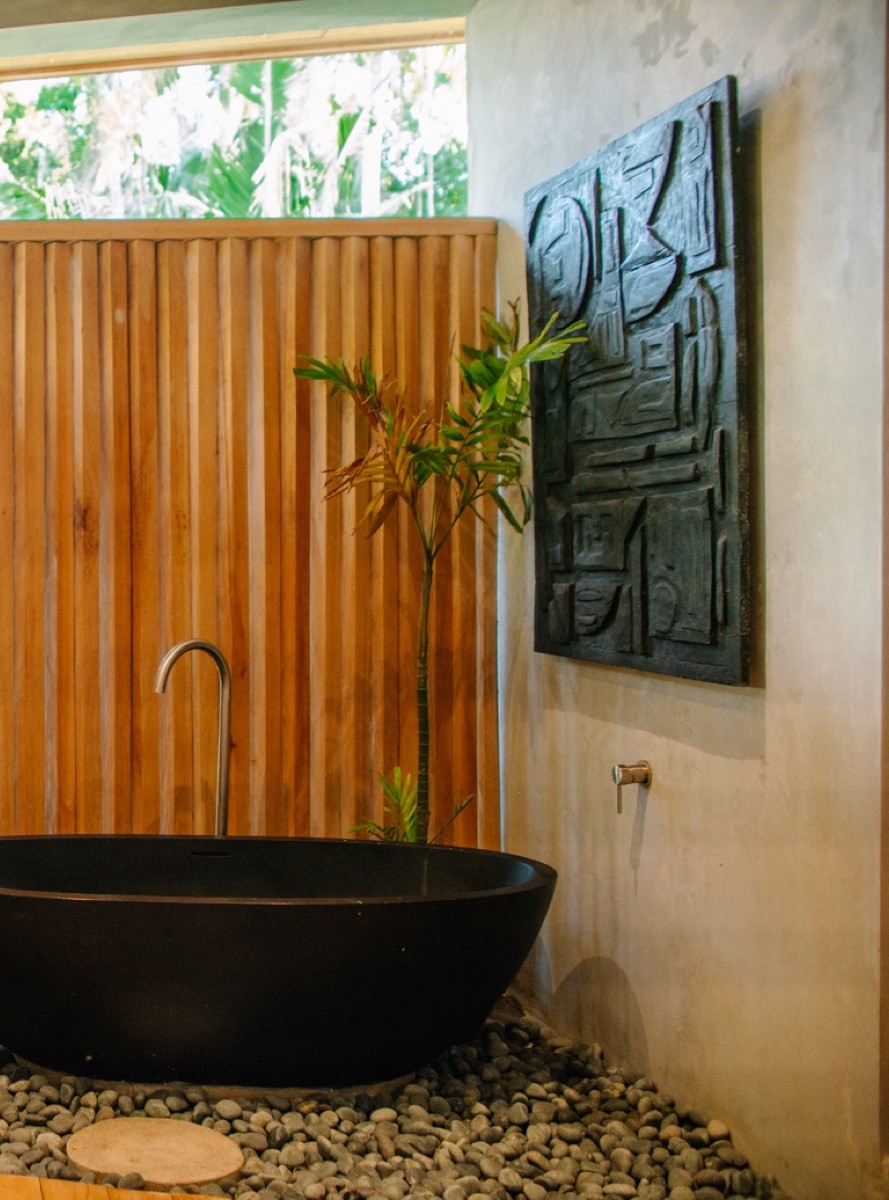
The palette is native: Mentawai wood, natural stone, handcrafted furniture. Woven rattan pendant lights throw geometric shadows across the floor at night. The beds are platform-style, built from salvaged hardwood and dressed in high thread-count cotton. Bathrooms are semi-open (and completely private), featuring a stone rainfall shower inside and a large outdoor bathtub where you can bathe with the sounds of jungle.
Single Fins have proper king-size beds (2m x 2m). Twin Fins have two generous singles (1.2m x 2m) that convert to a king, with an optional third bed for families. Each villa has a desk and Starlink Wi-Fi (if you must), along with air conditioning and hot water. But the rooms are designed to pull you outward, not in.
The villas embody modern tropical minimalism and blur the line between indoor and outdoor. The floor-to-ceiling windows frame either reef or jungle and open onto private terraces.
The palette is native: Mentawai wood, natural stone, handcrafted furniture. Woven rattan pendant lights throw geometric shadows across the floor at night. The beds are platform-style, built from salvaged hardwood and dressed in high thread-count cotton. Bathrooms are semi-open (and completely private), featuring a stone rainfall shower inside and a large outdoor bathtub where you can bathe with the sounds of jungle.
Single Fins have proper king-size beds (2m x 2m). Twin Fins have two generous singles (1.2m x 2m) that convert to a king, with an optional third bed for families. Each villa has a desk and Starlink Wi-Fi (if you must), along with air conditioning and hot water. But the rooms are designed to pull you outward, not in.
Food & Drinks
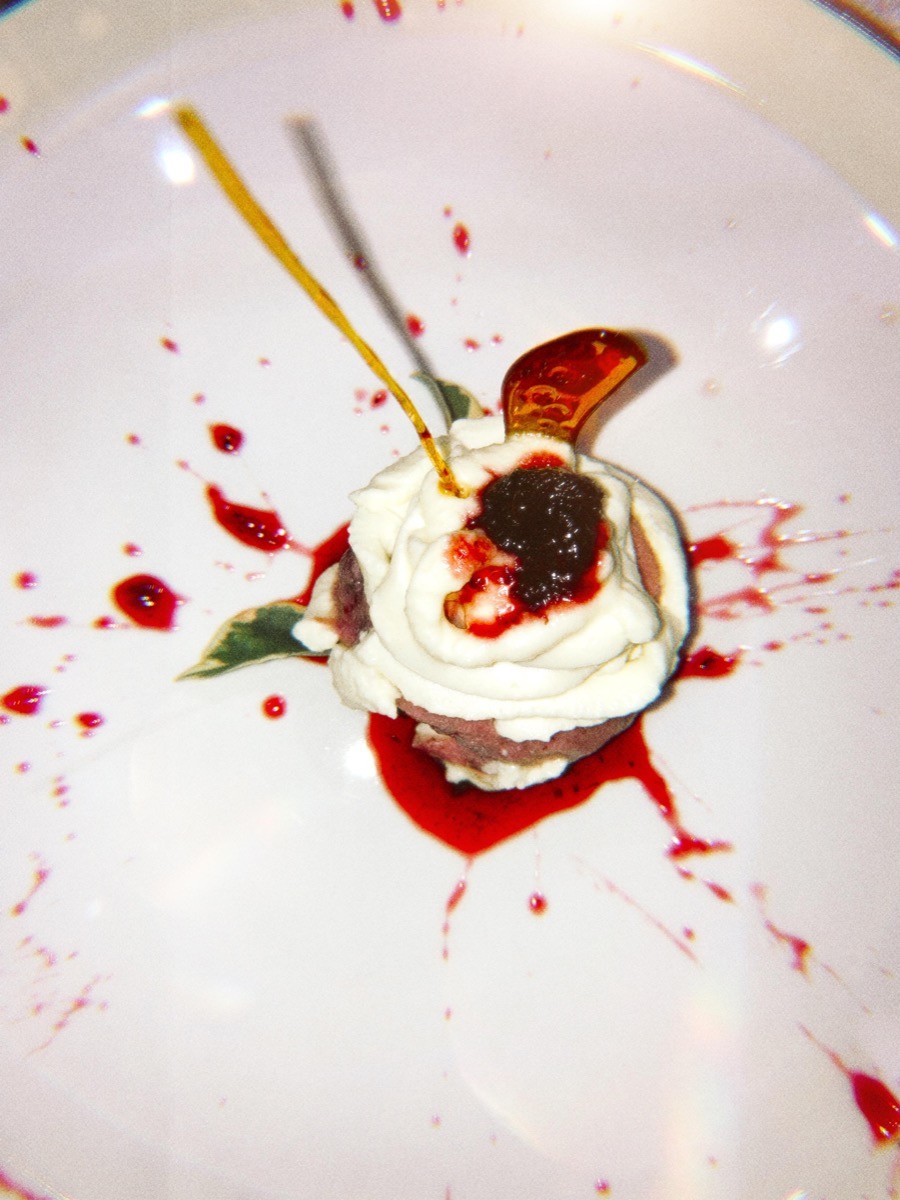
The culinary programme is unexpectedly serious for a surf resort this remote.
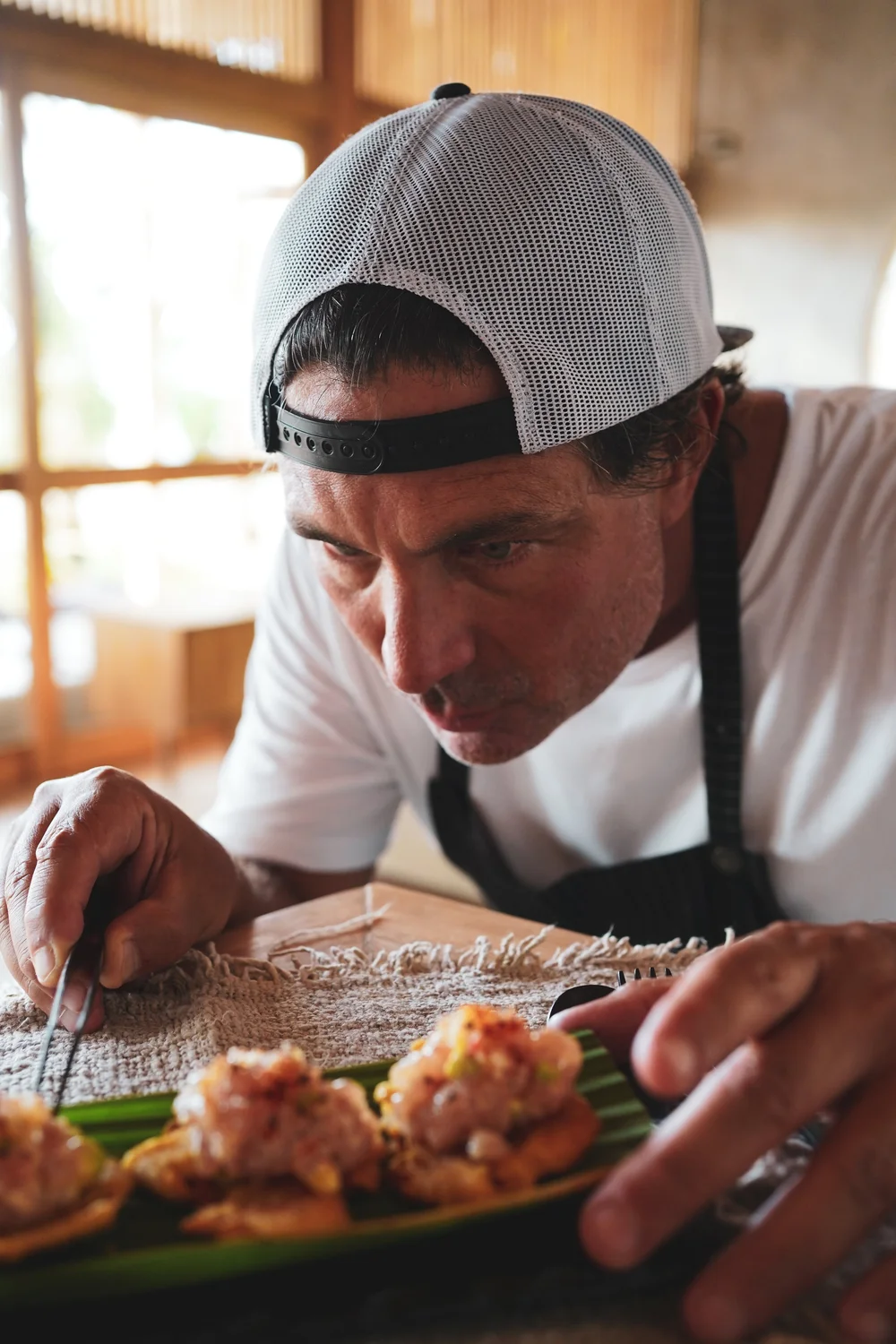
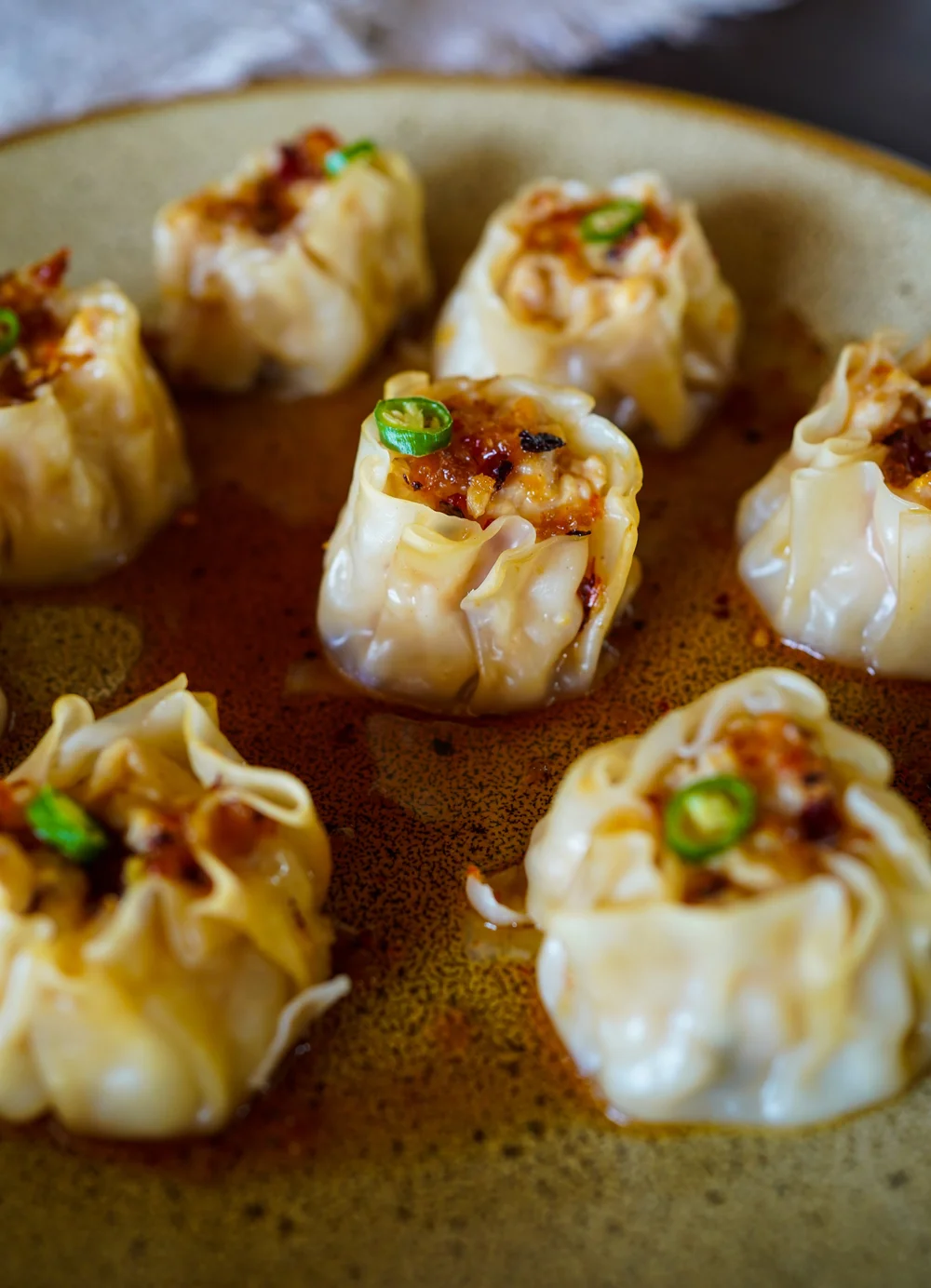
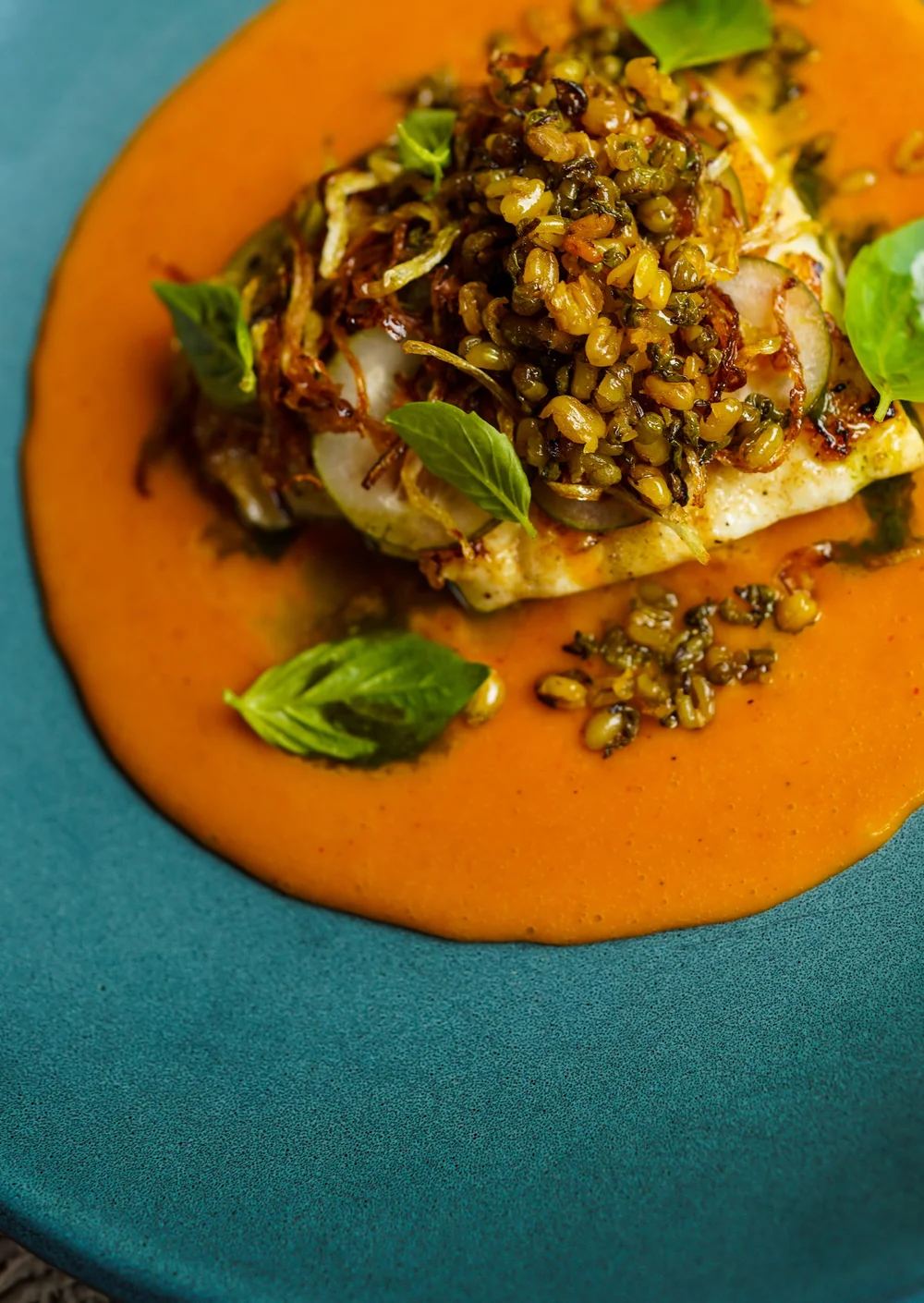
Credit goes to Chef Carlos Testino, one of Lima’s most respected chefs, who spent time on the island to design the menu and train the kitchen team. French pastry chef Talora Rouffaud handled the bread and dessert training. The cuisine crosses Peruvian, Amazonian, Indonesian, and Mediterranean flavours without feeling like a fusion gimmick.
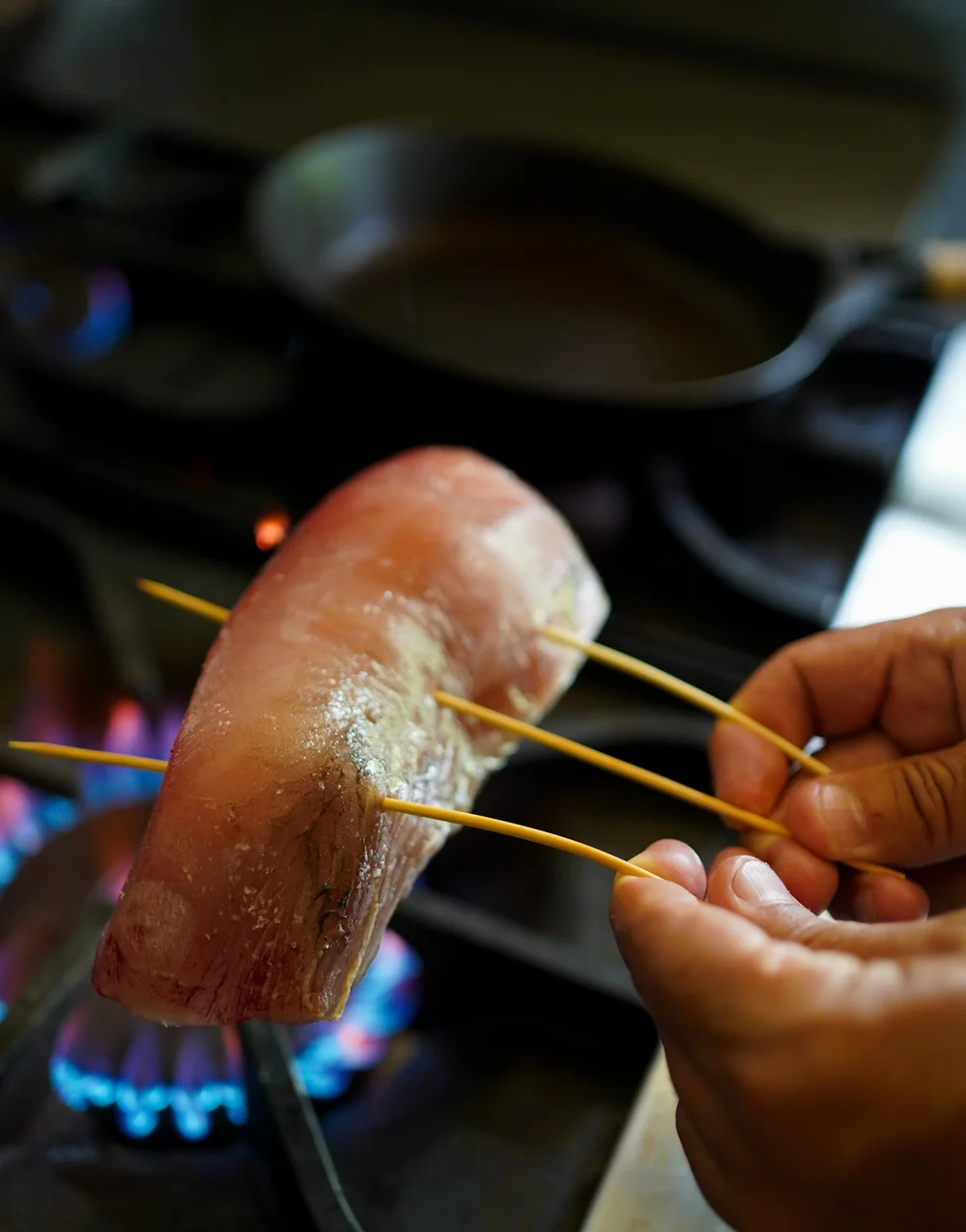
Breakfast is simple and generous: proper Sumatran coffee, tropical fruit, eggs, with bread and pastries that our French editor approves of. Lunch keeps things fresh and shows its influences, from satays to citrusy ceviches and tiraditos. Dinner steps up: handmade pasta, stews with Peruvian aji peppers and Indonesian spices, seafood barbecues.
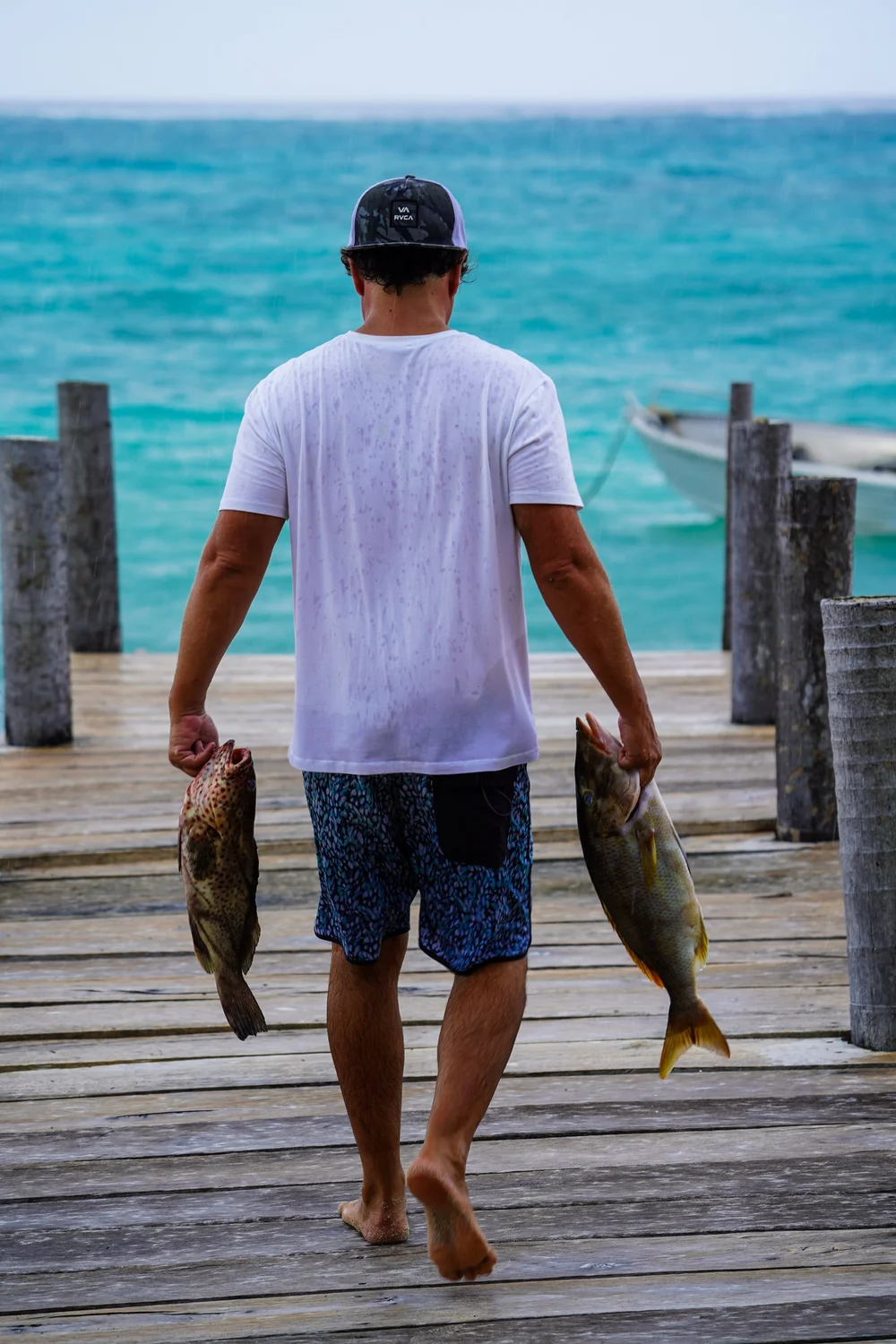
Food here is absurdly fresh. Fish comes directly from staff (and guests) morning fishing sessions. Ingredients are local, seasonal, and organic, sourced from surrounding communities.
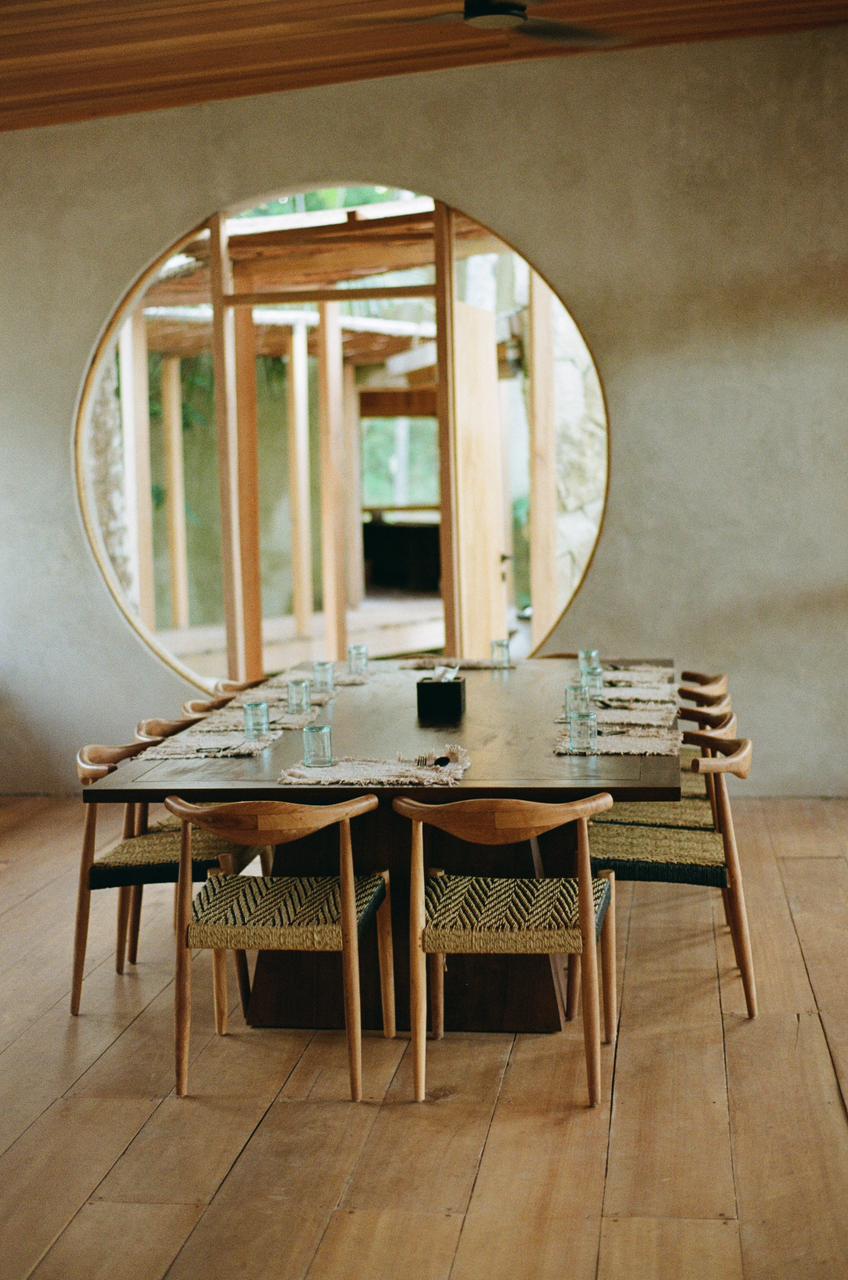
Meals usually happen family-style at communal tables in the open-air pavilion. There are also smaller tables for couples who prefer a quieter corner. The atmosphere stays intimate, with a maximum of sixteen guests, you’ll learn names quickly either way.
The culinary programme is unexpectedly serious for a surf resort this remote.
Credit goes to Chef Carlos Testino, one of Lima’s most respected chefs, who spent time on the island to design the menu and train the kitchen team. French pastry chef Talora Rouffaud handled the bread and dessert training. The cuisine crosses Peruvian, Amazonian, Indonesian, and Mediterranean flavours without feeling like a fusion gimmick.
Breakfast is simple and generous: proper Sumatran coffee, tropical fruit, eggs, with bread and pastries that our French editor approves of. Lunch keeps things fresh and shows its influences, from satays to citrusy ceviches and tiraditos. Dinner steps up: handmade pasta, stews with Peruvian aji peppers and Indonesian spices, seafood barbecues.
Food here is absurdly fresh. Fish comes directly from staff (and guests) morning fishing sessions. Ingredients are local, seasonal, and organic, sourced from surrounding communities.
Meals usually happen family-style at communal tables in the open-air pavilion. There are also smaller tables for couples who prefer a quieter corner. The atmosphere stays intimate, with a maximum of sixteen guests, you’ll learn names quickly either way.
Surfing
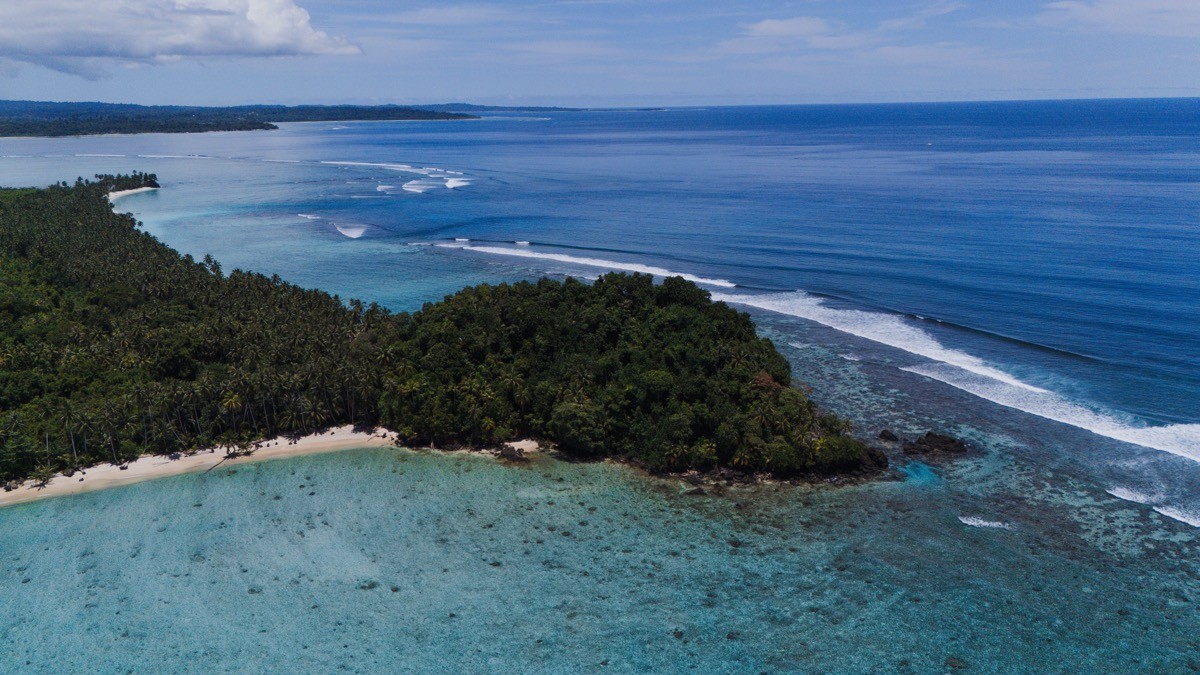
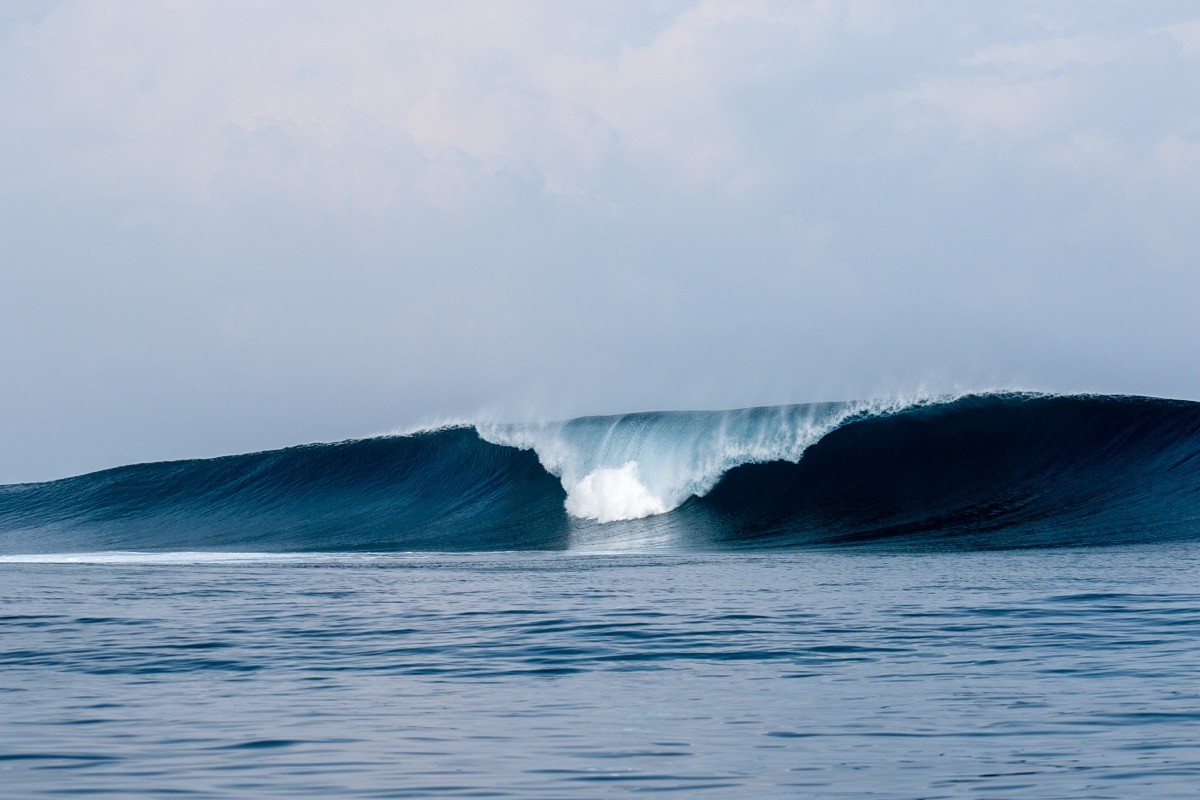
La Isla's position in Central Mentawai, near northern Sipora, grants access to a cluster of world-class breaks. All minutes away by boat, from mellow walls to experts-only slabs.
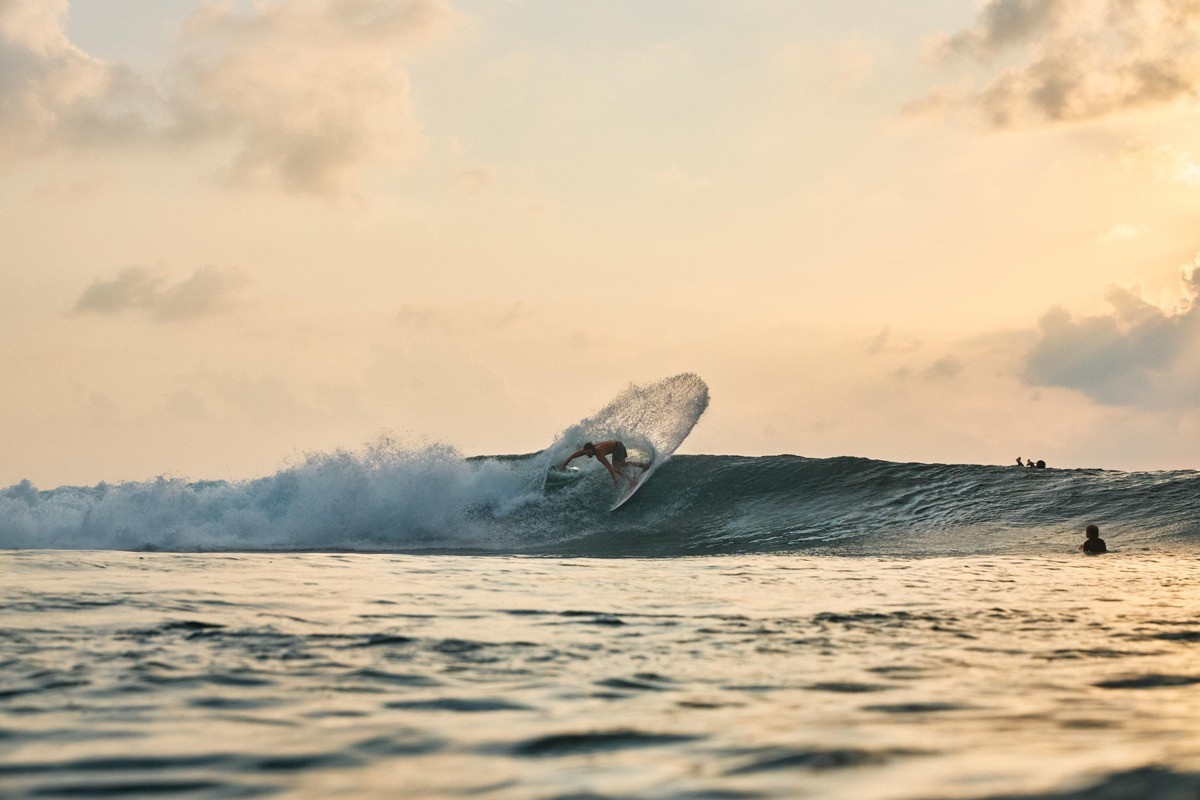
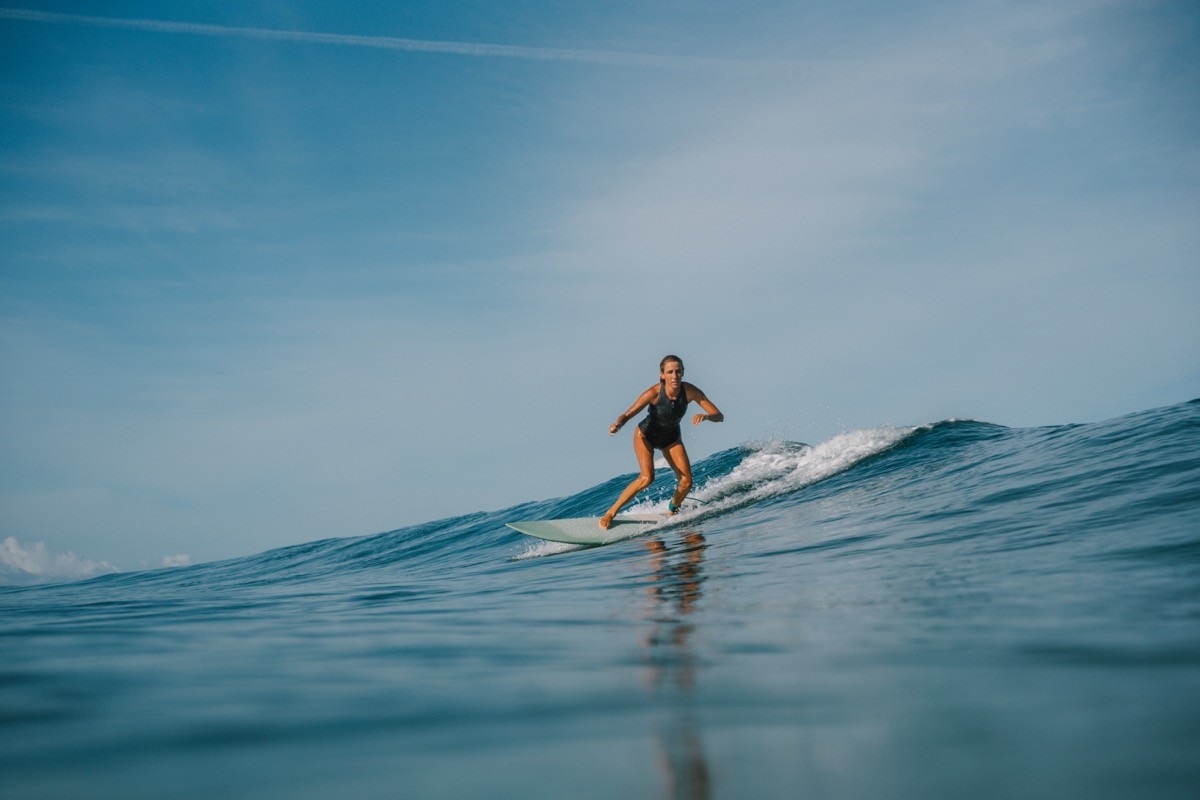
Right in front of the property sits Hookers, an intermediate reef break that offers long, racing lefts on a good West swell. Its last shoulder, Cocoa Reef, offers a gentler option for beginners. Over on the neighbouring island, Tikus provides another forgiving left. Telescopes runs up to 200 metres of fast walls over manageable reef. Scarecrows has multiple take-off peaks and ends in the Curry Bowl, a brief barrel section. For mellower days, 7 Palms is a gentle longboarder's wave on shoulder-high swell. Icelands is a swell magnet: rideable when other spots stay flat, heavy when a solid south swell arrives. Suicides is exactly what it sounds like: shallow, dredging, experts only.
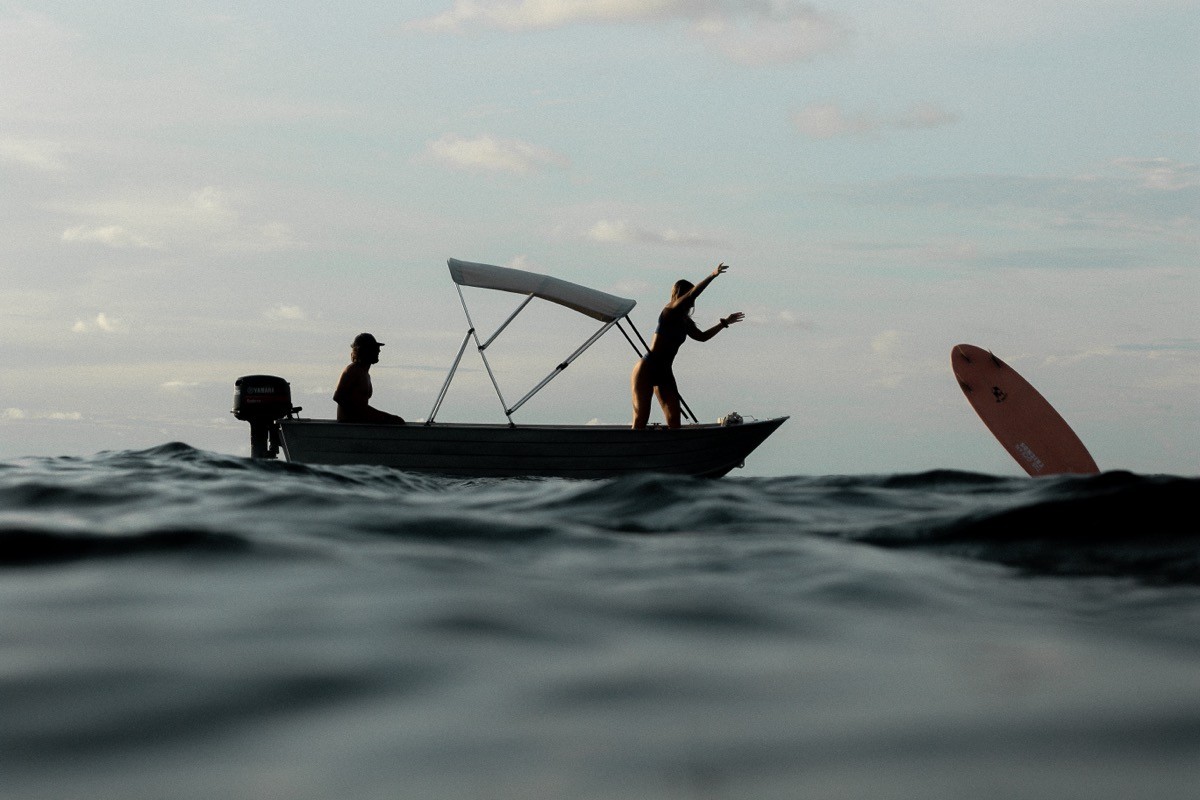
The Surf Pass grants access to La Isla's three boats, stocked with water, coconuts, snacks, and (yes) cold beers. Scheduling is flexible, allowing you to surf when and where you want. You are not locked into one group, one break, one timetable. If you want dawn patrol, you go. If you want something mellow, you do that.
Photography packages and excursions to Playgrounds or Katiet can be arranged. Two certified surf guides are always on location. If you forgot or broke a board, the quiver covers shortboards, twin fins, funboards, longboards, and soft-tops.
Peak season runs May to September with consistent 6-12 ft swell and reliable trade winds. Shoulder season (March-April, October-November) brings smaller surf and fewer people. La Isla also opens mid-December to mid-January for those seeking quieter conditions. Water stays 28°C year-round.
La Isla's position in Central Mentawai, near northern Sipora, grants access to a cluster of world-class breaks. All minutes away by boat, from mellow walls to experts-only slabs.
Right in front of the property sits Hookers, an intermediate reef break that offers long, racing lefts on a good West swell. Its last shoulder, Cocoa Reef, offers a gentler option for beginners. Over on the neighbouring island, Tikus provides another forgiving left. Telescopes runs up to 200 metres of fast walls over manageable reef. Scarecrows has multiple take-off peaks and ends in the Curry Bowl, a brief barrel section. For mellower days, 7 Palms is a gentle longboarder's wave on shoulder-high swell. Icelands is a swell magnet: rideable when other spots stay flat, heavy when a solid south swell arrives. Suicides is exactly what it sounds like: shallow, dredging, experts only.
The Surf Pass grants access to La Isla's three boats, stocked with water, coconuts, snacks, and (yes) cold beers. Scheduling is flexible, allowing you to surf when and where you want. You are not locked into one group, one break, one timetable. If you want dawn patrol, you go. If you want something mellow, you do that.
Photography packages and excursions to Playgrounds or Katiet can be arranged. Two certified surf guides are always on location. If you forgot or broke a board, the quiver covers shortboards, twin fins, funboards, longboards, and soft-tops.
Peak season runs May to September with consistent 6-12 ft swell and reliable trade winds. Shoulder season (March-April, October-November) brings smaller surf and fewer people. La Isla also opens mid-December to mid-January for those seeking quieter conditions. Water stays 28°C year-round.
Activities
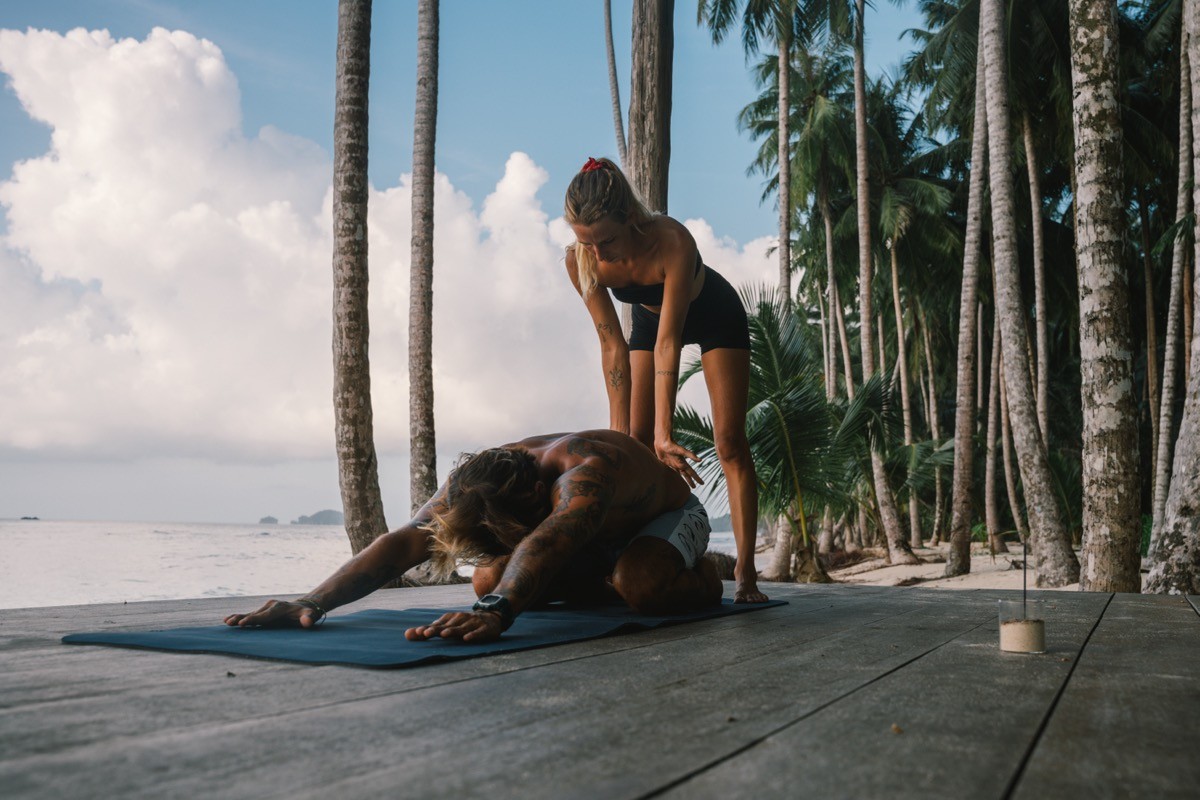
Wellness here means keeping your body functional enough to surf hard all week. Morning yoga runs at the beachfront shala, a thatched-roof open-air platform facing straight out to the reef. Massages using locally sourced coconut and herbal oils can be arranged on your villa terrace or in a shaded pavilion.
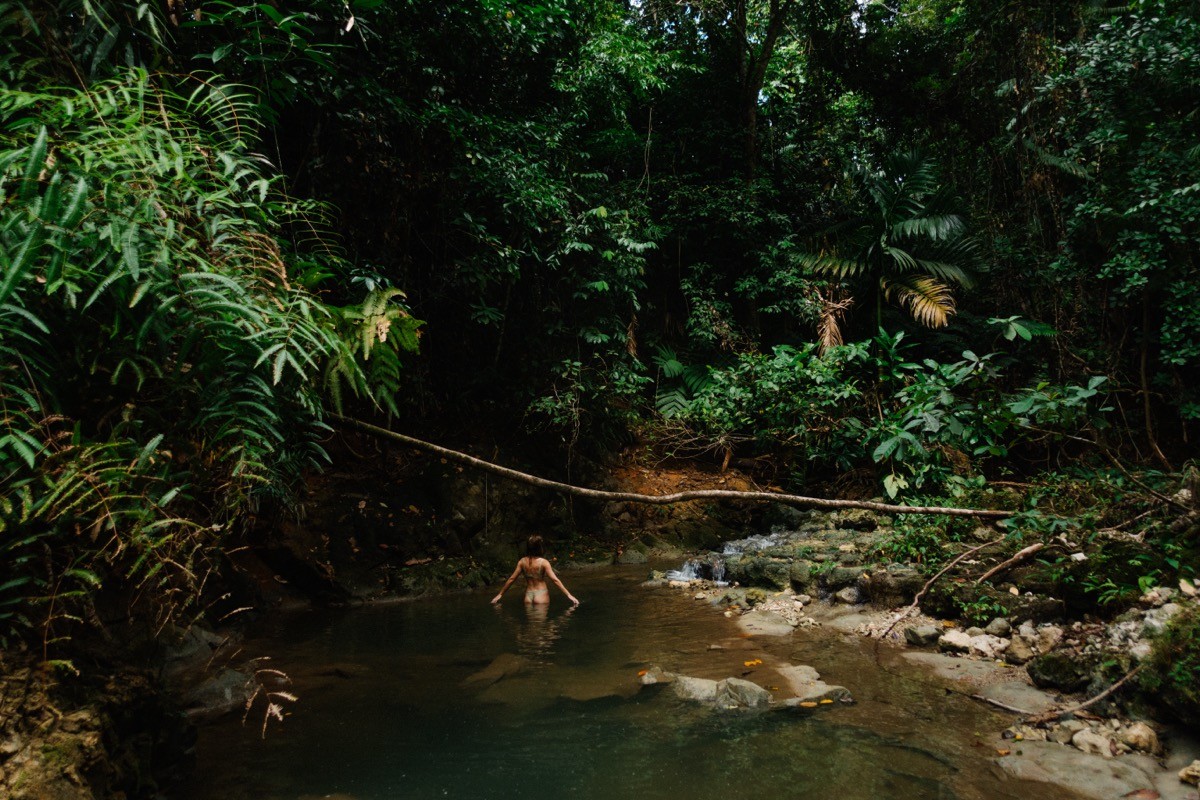
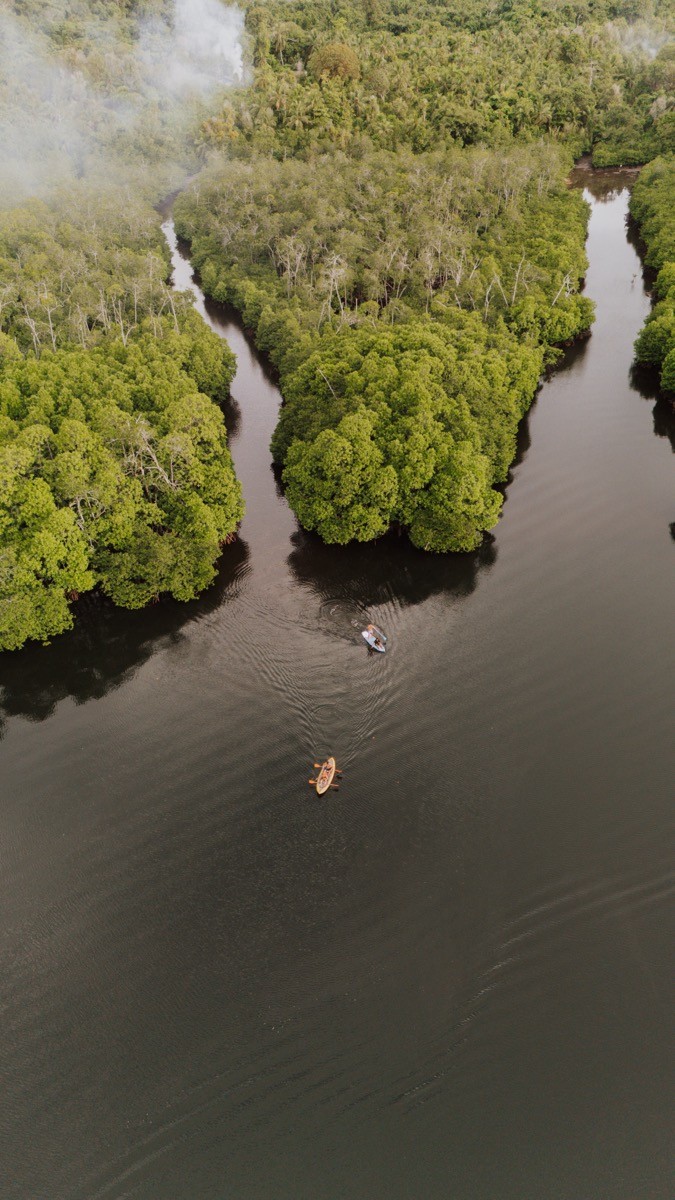
Between sessions, the island opens up. Paddle a kayak or SUP through mangroves. Take a snorkelling trip over the reefs around Potoutogat. Go beach hopping by boat, or disappear inland to freshwater jungle pools. Fishing trips are available too; bring back something decent and the chef will handle the rest.
There is genuine downtime here. Float in their infinity pool. Read on the terrace. Drink a coffee and watch the ocean from the communal pavilion. Nobody is going to hand you a schedule.
Wellness here means keeping your body functional enough to surf hard all week. Morning yoga runs at the beachfront shala, a thatched-roof open-air platform facing straight out to the reef. Massages using locally sourced coconut and herbal oils can be arranged on your villa terrace or in a shaded pavilion.
Between sessions, the island opens up. Paddle a kayak or SUP through mangroves. Take a snorkelling trip over the reefs around Potoutogat. Go beach hopping by boat, or disappear inland to freshwater jungle pools. Fishing trips are available too; bring back something decent and the chef will handle the rest.
There is genuine downtime here. Float in their infinity pool. Read on the terrace. Drink a coffee and watch the ocean from the communal pavilion. Nobody is going to hand you a schedule.
The People Behind
La Isla is the project of three partners: Javier Castro, a Peruvian surfer, and Nacho Atienza and Bea Alejandre, the Spanish couple behind Biombo Architects. The trio spent years scouting islands before choosing Potoutogat for its access to the Mentawai line-up. Building somewhere this remote tested everyone involved.
Their eco-concept is built around proper high-end comfort without the usual environmental cost. La Isla runs on solar power, draws water from rain collection and wells, and was built with reclaimed and locally sourced materials. The kitchen sources locally and seasonally, supporting local communities. Staff comes from the Mentawais and Padang, trained up rather than imported.
La Isla also pays into the Mentawai Surf Tax, which funds reef preservation and local infrastructure. It's a practical commitment, not a brochure line. The focus stays on maintaining quality at the current scale rather than rushing to expand. Six villas, sixteen guests maximum, three boats. The formula works because they haven't tried to outgrow the island.
La Isla is the project of three partners: Javier Castro, a Peruvian surfer, and Nacho Atienza and Bea Alejandre, the Spanish couple behind Biombo Architects. The trio spent years scouting islands before choosing Potoutogat for its access to the Mentawai line-up. Building somewhere this remote tested everyone involved.
Their eco-concept is built around proper high-end comfort without the usual environmental cost. La Isla runs on solar power, draws water from rain collection and wells, and was built with reclaimed and locally sourced materials. The kitchen sources locally and seasonally, supporting local communities. Staff comes from the Mentawais and Padang, trained up rather than imported.
La Isla also pays into the Mentawai Surf Tax, which funds reef preservation and local infrastructure. It's a practical commitment, not a brochure line. The focus stays on maintaining quality at the current scale rather than rushing to expand. Six villas, sixteen guests maximum, three boats. The formula works because they haven't tried to outgrow the island.